Showing posts with label Movie. Show all posts

Tuesday, July 23, 2024

Longlegs (2024) - Review

Longlegs is a special movie to me. I was luck to have caught this movie within a week of its release, forcing myself the entire media cycle to avoid any information about this film - I will attempt to do as little as possible to spoil the movie, but describe why I enjoyed it so much. Maika Monroe, who leads Longlegs as FBI Agent Lee Harker, does a fantastic job of playing the audience's surrogate; she is trying to investigate the seemingly connected murders occurring in the 1990s revolving around an apparent serial killer who kills without leaving traces behind, except coded letters signed "Longlegs". From the get go, the audience is aware of Nic Cage's Longlegs, a pale, white-haired individual who does nothing to hide his strangeness with others, so it is only a matter of time until it is revealed what the intentions of this man are.

The direction of this movie is incredibly chilling. From the first scene, I knew that this movie would have a special style. Long and seemingly unnecessary shots are dotted throughout the film, training the audience to look at every stretch of screen for what could be hidden. Flashback scenes are contained within an aspect ratio of 1:1, connecting to the use of handheld film cameras that self-developed on film, while modern scenes are treated with a normal aspect ratio. There was certain care and planning that Osgood Perkins took while crafting the script and putting his vision onto film; this was certainly a passion project that took skill to execute properly. Longlegs will be a film that I cannot recommend to many other people in my life, but if common horror and thriller elements are not usual detractors for you, then this could unnerve and move you with its simplicity in a similar way that it did for me.

Wednesday, April 24, 2024

Red Rock West (1993) - Review

Red Rock West is a movie that could never be made again in the 2020s, for better or for worse. The movie stars Nicolas Cage as a drifter, Michael, who has travelled near a rural Wyoming town to interview for work. After a string of setbacks, Michael finds himself in a small-time conspiracy when his identity is mistaken with that of a hired killer (Dennis Hopper) and is tasked with killing the local bar owner’s (J.T. Walsh) wife (Lara Flynn Boyle).


This role of a drifter is one that Nic Cage has inhabited quite often throughout his career (give examples from reviews), and it is a role in which he often succeeds. The backstory can evolve as the story needs it, and anything else can fall away. Michael’s backstory evolves at each of the story beats: he has a disability that prevents him from getting a job, then the injury is explained as he relates to other characters, and there is a lingering tension between doing the right thing and succumbing to easy ways to access security.

Another strength of Red Rock West is its incredibly small cast. The number of people on screen at any time is not only small, but the cast list is also small. Doing a quick check over the credits, the total cast is about twenty people. This not only allows for the small town feel to be conveyed appropriately, but it also allows for the story to breathe through its characters; the characters that are present are given the permission to go beyond just advancing the story and inhabit the world for the short 90 minutes. No one outplays each other, even with veteran actors like Hopper rounding out the cast

As stated above, Red Rock West could not be made again. The chase for box office success has made it so that those which appeal to the broadest audience, something that cannot be said of this movie. That is not to say that it is a bad movie. On the contrary, Red Rock West shines brightly today because it is different than what we have become adjusted to. This movie will remain one of my favorite Nic Cage movies because of how simple it tries to be and succeeds to a great degree.

Tuesday, April 9, 2024

City of Angels (1996) - Review

City of Angels starts as if it is going to take you along Nic Cage's angelic duties as Seth, trying to heal the citizens of Los Angeles, as he discusses the various things that angels have missed their opportunity of participating due to the duties they have been assigned from the beginning of man with another angel, Cassiel. Cassiel, played by the late Andre Braugher, plays the straight man against Seth's fascinations toward a human surgeon, Maggie, portrayed by Meg Ryan. This fascination towards Maggie is mostly because she does what humans rarely are able to do: catch a glimpse of their angelic presence before their appointed time of death.

Seth's developing romantic interest in Maggie is sad, not because she cannot interact with him - she eventually can at Seth's willing projection - but because he cannot feel anything that his temporary human form can touch. This makes his longing to have human experiences even stronger, especially when he meets a former angel, a Mr. Messinger (Dennis Franz), who explains his life as one that was filled with joy once he settled down  with his now wife, whom he has never told of his former nature.

City of Angels was a fun watch nearly thirty years later; it was a breath of fresh air to sit back and relax for almost two hours without my senses being assaulted by superfluous and rushed plot tensions. The plot tension was evident from the very beginning - Seth's desire to live like the humans do, but reluctant to give up his calling and the associated blessings that accompany it. What follows are the philosophical musings between humans and angels as to which calling is more noble: to usher souls to their final resting place or to exhibit free will and experience the desires of the flesh. I put up with a lot of incredulous contrivances when it comes to fiction, however, this conceit was too much for me. While it is a charming exploration of a sort of spiritual Romeo & Juliet, this rendition romanticizing the union of angels and humans, something that flies in the face of the orthodoxy that I hold to. I didn't want to make it too much a sticking point in my review, however it just warranted a mention because of its importance to me. Otherwise, if that doesn't bother you, City of Angels is well worth the tonal relief that it can give you, a far cry from modern reliance on action.

Tuesday, March 26, 2024

Teen Titans Go! To the Movies (2018) - Letterboxd Review

I have been trying to use my Letterboxd account for more reviews that didn't inspire me to spend too much effort into films that try and burn me out seriously and critically reviewing them. Teen Titans Go! To the Movies is one of those movies that I spent the first 15 minutes wanting to walk away from. I mention in my Letterboxd review for this movie that I haven't been so affected by cringeworthy material since 2017 when I saw The Lego Ninjago Movie in theaters, yet could not bring myself to walk out because I paid for a full-price movie ticket. The hour-ish runtime remaining just doubled down on the tone-deaf references to popular culture that were in their prime decades before the target audience was either alive or semi-conscious. 

Next week's review will be picked from a list that I have compiled as "palate-cleansers" for when I am assaulted by movies that threaten burnout in this project.

Tuesday, March 19, 2024

Dream Scenario (2023) - Review

Dream Scenario is a black comedy film, which is the most recent offering from Nicolas Cage where he plays Paul Matthews, an unassuming and unimpressive professor. This may seem like a large dig at the completely meek man who finds himself at the center of unwanted attention - appearing in the dreams of those by which he is acquainted, and quickly reaching the larger community, even the world. Paul must navigate this new reality, coping with his newfound fame and infamy, or suffer the societal consequences. No one is sure exactly why Paul is at the center of these at first innocuous then graphic (in many ways) dreams, however they continue to suffer from this collective phenomenon until it passes for good.

The strength of Dream Scenario is its superb casting; the film boasts a solid cast of actors who on sight triggered memories of their comedic performances - Michael Cera, Tim Meadows, and Dylan Baker - but delivered subtly angry performances. The dean of Paul's university (Meadows), Brett, is a concerned friend but must walk the line between personal and professional lives, Trent (Cera) is the lead of a small marketing start-up and has to deal with Paul's newly inflated ego, and Richard (Baker) continues to be frustrated that he has to contemplate the aforementioned mediocre professor. These characters are all upset with the fact that they have not received a dream visitation by Paul in their own ways, yet for different reasons, and I cannot imagine any other actors being able to deliver these nuanced and subdued performances. Julianne Nicholson portrays Paul's wife Janet, another person who fails to have any dreams of her husband like all of those around her. She is also tortured by her husband's newfound celebrity status, and refuses to give in to his slow unraveling due to his self-serving nature. 

Out of the performances described above, Nicholson's performance deserves the most credit - the focus on her character's struggle is especially important because Paul does not know how to regulate the oxygen being sucked out of every room that he so desperately craves, even when his world comes crashing down. Her story highlights just how much that Paul tries to be mild-mannered, unassuming, and capitulating, but all of those character traits are just a mask for his egotistical desires. Cage also delivers the promise of his character from the absolute start: he remains this low-achieving academic who by no means has any control over his emotions. The Paul Matthews at the start is the same at the end, for better or for worse. The casting of Cage was also a wonderful move - this is a man 40 years into his acting career who is self aware of the image that he has in the public eye. I have made no attempt to hide the fact that I got into watching Nic Cage movies with more interest because of the viral freakouts of the late 2000s and early 2010s, and this seemed like the best form of closure that Cage could have ever had to his viral fame. Dream Scenario has quickly cemented itself as a staple for Cage's career and will be one of the films that haunt his fans, for better or for worse.

Tuesday, March 5, 2024

Snake Eyes (1998) - Review

Snake Eyes stars Nicolas Cage as corrupt policeman Rick Santoro, who is roped into an unravelling criminal conspiracy after the murder of the United States Defense Secretary at a heavyweight boxing fight. Gary Sinise plays Kevin Dunne, a U.S. Navy Commander who is in charge of the security detail for the Secretary of Defence and a childhood friend of Santoro. Thinking that determining the circumstances surrounding the assassination of the Secretary will raise his profile, Santoro starts to realize that the fight, the death of the Secretary, and the appearance of his friend are all connected.

Snake Eyes fits into Cage's filmography in a time where he was receiving critical success and after what I consider to be his trilogy of action stardom (The Rock, Con Air, Face/Off), and is often lost or overshadowed by opinions of those movies. Cage is able to slot into the role of Santoro effortlessly, and is the kind of performance one would expect to see from him in an average movie. Snake Eyes benefits, however, from Cage dialing back his usual overflow of unpredictability once the assassination attempt occurs. Santoro is initially portrayed as a corrupt officer whose ability to do his job is in question, but once he takes charge of the investigation with Commander Dunne, he is shown to be an effective investigator. This change in the tone that the character undergoes is something that I enjoy Cage using; it can be almost a cheap shorthand to use Nic Cage as the "goofy, zany, unhinged" character because of such roles as Vampire's Kiss or The Wicker Man have popularized. Snake Eyes allows Cage to partake in this insanity for contextually appropriate levity, while being able to flip a switch and act in a different mode altogether.

The plot for Snake Eyes is fairly straightforward - the corrupt cop whose gambling habits unwittingly gets him swept up into a criminal conspiracy seems to be a cliche and is usually quite tiring. The twist that Gary Sinise's Commander Dunne is the mastermind behind the entire events of the movie occurring nearly half-way through the movie (for the viewers) makes for an entertaining, multi-layered cat-and-mouse game. The betrayal that Santoro feels is earned once he realizes that he was simply meant to be used as an unwitting tool for his longtime friend's scheme - we have known for a while that Dunne is the true villain of the story, so we know that it is only a matter of time before Santoro catches up with the realization. I found it quite amusing that most of his progress on the murder investigation coincided with his personal investigation as to why the boxing fight was thrown, costing Santoro thousands of dollars in loss.

I entered this viewing of Snake Eyes with an overall positive opinion, and left it with the same level of enthusiasm. As stated above, Snake Eyes plays with familiar story tropes but with amusing and often entertaining results. Outside of strong performances from Cage and Sinise, Carla Gugino and Stan Shaw also brought complicated characters to the screen in supporting roles. I think the best way to describe Snake Eyes is that it is the equivalent of comfort food - you know deep down that the food is bad for you, but it provides a sense of comfort or normalcy to your life despite your present circumstances.

Tuesday, January 30, 2024

Deadfall (1993) - Review

Deadfall (1993) is a crime/drama directed by Christopher Coppola starring Michael Biehn, Nicolas Cage, Sarah Trigger, and James Coburn. After a father/son con scheme gone wrong, Joe Donan (Biehn) must face the aftermath of the death of his father (Coburn). Working with his uncle Lou (also Coburn) and his underlings (Trigger, Cage) for various con and gang-related activities, Joe tries to learn more about the complicated history that transpired between his late-father and his father's twin.

The movie is packed with some pretty strong performances, sometimes even in more ways than the usual positive indication. I remember watching Deadfall almost ten years ago and relishing in the pure chaos that Cage brings to the screen as Eddie King, Lou's right hand man. This chaos is an evolution of his exploration of an irrational mind that is also on display in Vampire's Kiss, a review in which I believe his performance in Deadfall is mentioned. There are quotes from Cage that have become iconic within my friend group over the years that have come from this movie specifically, so the influence that this movie has had on my social life is quite great. Nic Cage notwithstanding, Michael Biehn gives a tortured performance out of Joe Donan, not because of any trauma that the character is supposed to have - of which he has plenty - but due to the very thin script he was likely given. Michael Biehn is a great actor, and it shows, Joe Donan is not a very strongly written character. James Coburn, whose face or voice you are likely to come across in a variety of different projects spanning nearly forty years, is always welcome to be on screen, and Deadfall is no exception. Again, the paper-thin characterization of both Lou and Mike Donan, of which he plays both characters, can only be improved so much by the skill Coburn did bring to the performance. The loss of Eddie near the middle of the movie marks a point where the train had already left the station; without the paranoia that Eddie brought out of other characters' perceptions of himself and the lack of trust he has in others, Deadfall meanders to a slow fizzle. The movie itself is a series of short, disconnected confidence jobs leading to an unsatisfying denouement.

Without being reductive of any other aspect of the movie, but Deadfall shines when it has out of this world characters, and the only one who fits the bill is Eddie King. Nicolas Cage, despite his later objections to how his 'freakouts' have been received, breathes life into the otherwise stiff body of this movie. Once his character exits the story, the movie goes back to meandering without a purpose. I enjoy Deadfall to a certain extent, and there is some serious talent that could lift the movie out of its muck and mire, but a bad story can only be helped so much by strong performances.

Tuesday, January 9, 2024

Honeymoon in Vegas (1992) - Review

The movie commands great star
power, but fails to capitalize with a
lackluster execution.
Honeymoon in Vegas is a romantic comedy movie starring Nic Cage, Sarah Jessica Parker, and James Caan. Nic Cage plays an everyman private detective, Jack Singer, who is deeply afraid of marriage due to his mother's insistence at her deathbed that he remain unmarried. This upsets his longtime girlfriend, Betsy (Parker), who has waited a significant amount of time for Jack to come around. Under threat of Betsy leaving him, Jack suggests they go to Las Vegas that weekend and get married. Jack's anxiety continues to push the marriage further in the day, only for him and Betsy to be trapped in the plans of a seasoned gambler, Tommy Korman (Caan),  who is determined to take Betsy as his own wife through an underhanded poker scheme.

Honeymoon in Vegas is a fun and snappy movie, but it is a movie that shows its 31 years of age in every sense. Being born a couple years after this movie was made, I am really only aware of how the culture boomed technologically towards the year 2000. I bring this up in order to highlight the reasons why the movie ultimately falls short for me; save for the last maybe 20 years, humanity has never been so connected with each other than they are now. The movie does attempt to address the fact that Jack does have limited ways of tracking Betsy and Tommy across the country as Jack and Betsy's relationship falls apart, especially since Jack is an established and mildly successful private detective, but I ended up having to throw my hands up as he always is one step behind finding the new pair through pure serendipity. At the end of the day, I have to admit that Honeymoon in Vegas is supposed to be viewed with whimsy and aloofness, otherwise I may find myself to be more judgemental than I should. I did find joy looking back at Cage's involvement in this movie with a Vegas setting, most particularly with the international Elvis convention subplot subtly poking its head in at every turn. I say I find this vicarious joy because I know of Cage's long obsession with the King of Rock and Roll, ELvis Presley. This is especially true of when the subplot comes to the fore at the end of the movie as Jack has to join a plane full of Flying Elvises in order to get back to Vegas in time for thwarting Tommy's plan to marry Betsy. Having to don the light-up flight suit seems like a culmination of everything outside of Jack to gain the confidence he needs to show Betsy just how much he does care for her. 

I have to mention the performances in the movie briefly. There is not much for me to say about the performances in the movie, as the characters all seem average to me; even the ever-so-successful professional gambler, Tommy Korman, seems like an average guy toward the end of the movie. Beside the many Elvises sprinkled throughout the movie, the only character actor present is Ben Stein, who portrays a nameless older man whom Jack berates for spending ages to purchase an airline ticket weeks in advance, an older man who is an obstacle for Jack as he tries to pursue Betsy from town to town. 

I remember enjoying this movie when I watched it years ago, as I added it to my collection, and I still do enjoy it. It is a fun romp, but trying to think about the movie critically brings my excitement to recommend this to anyone else down to almost nil. It is a weird point in Cage's filmography, as he is transitioning to more mature roles - as opposed to his many coming-of-age roles of the 1980s. I feel as though he is trying to find the roles that he best inhabits and can bring to life on the big screen, but Honeymoon in Vegas is not something I can recommend to anyone today, 31 years later. It is a product of its time in the most negative sense, and is not a diamond in this rough patch of filmography.

Tuesday, January 2, 2024

Raising Arizona (1987) - Review

Raising Arizona is a crime/comedy film directed by Joel Coen starring Nicolas Cage, Holly Hunter, John Goodman, William Forsythe, and Frances McDormand. Nicolas Cage stars as H.I. McDunnough, a repeat convenience store robber, who falls in love with a police officer named Ed (Hunter) and attempts to live an honest life and start a family. The two are told that they are unable to have children and set out to kidnap one of a set of quintets that are made famous because of their association with a local businessman, Nathan Arizona (Trey Wilson) and his wife (McDormand). The couple encounter setback after setback as reality crashes in around them as authorities seek the safe return of the lost Arizona baby.

Films from the same era usually fall victim to feeling dated because of the prominent use of current media and technology to appeal to the audience of that time. The focus of Raising Arizona is reliant on the situational comedy that H.I. and Ed find themselves in. The opening monologue establishes the unlikely couple, felon and police, and establishes that what you are going to see is due to the complexities of their different backgrounds. Despite their differences, the two characters work so well together as they try to navigate the consequences from illegally obtaining their new baby boy. Cage shines as he can be as zany as he can be while inhabiting this role, as being an oddball is a requirement to be a character in this movie; his command over the range of the extremes of the broad spectrum of emotions is a positive in Raising Arizona. John Goodman and William Forsythe as escaped convicts also have great chemistry with Cage and Hunter and, until later on in the movie, they seem to be neutral observers that do not threaten the constitution of the new family. The humor sprinkled throughout keeps the action moving at a great pace and obfuscates the timers running in the background of when the next thing is supposed to go wrong. The story the movie tells is incredibly tight; there is no superfluous action, and everything has a purpose. Even when there are quiet moments in the movie, the audience knows that there is something lurking around the corner due to the precarious situation H.I. and Ed find themselves in. Raising Arizona is a master class in storytelling and remains a classic piece of film history nearly 35 years later. This is a piece of Cage history that should not be missed by anyone, whether they are engaging in a similar project or not. 

It killed me to not write so much about the ins and outs of this movie - I just imagined someone clicking on this review hoping to get something more than what this review actually turned out to be. For someone who has not seen the movie, it is worth seeing even without knowing every little nuance of film-making and discovering the magic of the story for yourselves. I wanted this to be a record of the high praises that I have for this movie as I move through the project.

Tuesday, December 26, 2023

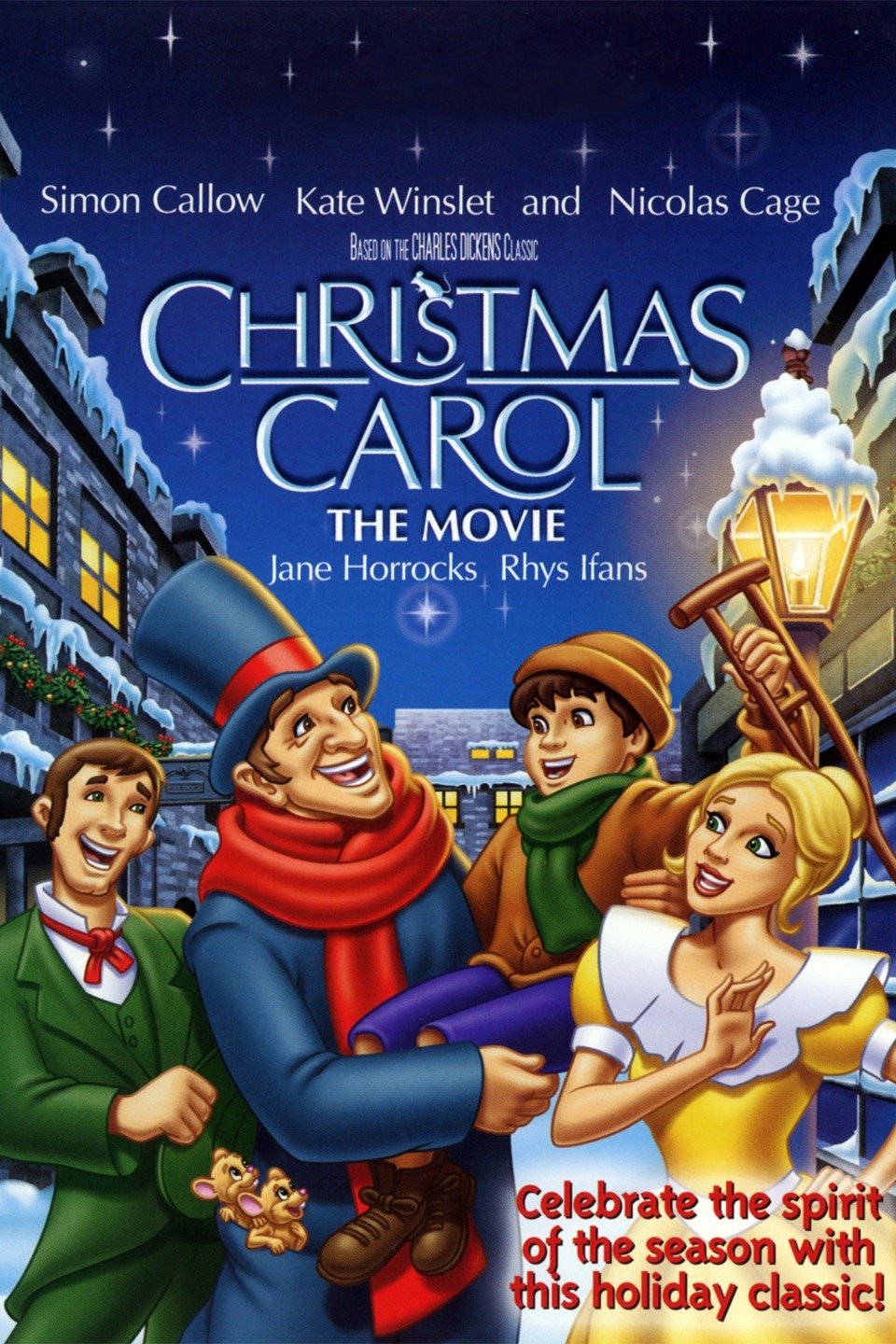
Christmas Carol: The Movie (2001) - Review

Christmas Carol: The Movie is an animated adaptation of the Charles Dickens short novel of the same name. It is the classic story of an individual, Ebenezer Scrooge, who has no regard for his fellow man, especially during the Christmas season, and is confronted by spirits who show him the effects of his life in the past, present, and potential future. The cast of this movie is star-studded, comprising of  Simon Callow (Scrooge), Kate Winslet - playing a nurse (Belle) previously romantically affiliated with Scrooge, Nicolas Cage - portraying the spirit of Jacob Marley, Scrooge's previous business partner, along with roles filled with Michael Gambon, Robert Llewellyn, and Rhys Ifans.

The movie is technically sound. The movie sits at 77 minutes, so not as long as what would be considered full-feature length, but that is not something to hold against the movie. The story that is told is fairly familiar, as it has been adapted in popular media countless times in the past century, but the non-familiar bits of the story were also interesting without wearing too thin. The performances given for this movie were great, however, they are overshadowed by a less than par animation quality. I hate to speculate as to if elements of an average movie were different if that would make it better, but I can only imagine if the animation for this adaptation were of better quality than it would be a product that cable channels would air during the Christmas season. Speaking about Nic Cage's performance in particular, I believe it is a waste of the range of emotion that he is known to be able to show on screen or by voice in other projects. His role in this movie is incredibly brief, and is only on screen to be wispy and supernatural. It was a shame to see such small roles for some big names, but I think that the movie struck a good balance between the portions that it did add to the story, especially the live action segments at the beginning and end of the movie. 

I would not really recommend this movie to watch during the holiday season, and not particularly valuable for those who are embarking on a similar project as me. As I have stated above, this movie is technically sound. It is fairly average, and really not worth many peoples' time. It is a good adaptation of a classic story, but even with the benefits of modern actors and storytelling media, Christmas Carol: The Movie is destined to remain such a niche product when there are countless other adaptations that have better viewing value.

Tuesday, December 19, 2023

Trapped in Paradise (1994) - Review

Trapped in Paradise is a 1994 comedy film starring Nicolas Cage, Jon Lovitz, and Dana Carvey. The three play brothers Bill, Dave, and Alvin Firpo. Dave (Lovitz), a con man, and Alvin (Carvey), a kleptomaniac, are recently released convicts remanded into the custody of their brother Bill (Cage), a restaurant manager who struggles to keep his own nose clean. After hearing about a bank with lax security in a rural Pennsylvania town, the three rob the bank only to start encountering trouble from trying to escape the town, aptly named Paradise, from state police, FBI, and a pair of locals. Over the course of Christmas Eve, the three each find themselves charmed by the small town and attempt to change their natures.


Trapped in Paradise is a finished product that is just a shame in its released state. How can a movie starring Jon Lovitz and Dana Carvey be anything but funny? In fact, the movie tries at every point to be a comedy, but only elicited a couple small chuckles toward the end of the movie - with a runtime of nearly two hours, this made for a pretty bland experience. The interplay between the three protagonists was quite humorous, even if it didn't elicit any laughs, while capturing the brotherly spirit any dysfunctional family. What tanked my enjoyment of the movie ultimately was reducing Carvey down to a caricature of his comedic self. Lovitz playing the same comedic straight man that he always seems to play was not detrimental to my experience, but his character, much like Carvey's Alvin, stayed flat the entire time. Cage's Bill Firpo continues his streak in this time in his filmography as trying to establish himself as an everyman. In fact, Cage stands out in this movie for being as normal of a person as possible, even though Bill is still a more subdued version of his brothers. Sean McCann as the police chief of the idyllic town and Richard Jenkins as FBI agent Peyser were welcome faces to see throughout the movie, which the movie could have used more of, even if they were featured fairly prominently in the ending scenes of the movie. While Trapped in Paradise is full of raw acting talent, it really failed to come together. Trapped in Paradise is too focused on reducing the output of Lovitz and Carvey for both to shine as comedic roles, and while the performance by Cage was appropriately grounded, it does not save this movie from being in the pile of forgotten Christmas tales.

Tuesday, December 12, 2023

The Family Man (2000) - Review

The Family Man is a 2000 holiday-drama film starring Nicolas Cage and Téa Leoni, also starring Don Cheadle and Jeremy Piven in supporting roles. Nicolas Cage plays Jack Campbell, a Wall Street executive, whose relationship with his girlfriend Kate (Leoni) 13 years earlier ended with the extended time apart due to Jack's post-college internship in London. After encountering a man (Cheadle) trying to rob a convenience store, who sends Jack to an alternate timeline where he and Kate never ended their relationship. Navigating his new life with Kate, Jack must figure out what he really wants in life - a life filled with meaningful relationship, or his lifestyle of decadence.

The Family Man is a great modern remix of classic holiday stories, namely A Christmas Carol and It's a Wonderful Life. Jack Campbell is the Ebenezer Scrooge of this story, a man who is consumed by greed and sees the Christmas holiday as an impediment to the function of his business, and also a man who sees all of his personal relationships as transactional. Jack must be shown what his alternate self found of value in order to reevaluate his life decisions once he comes back to his point of origin. I make a comparison to It's a Wonderful Life in the opposite sense: Jack's glimpse into the other reality is not a glimpse of the lives of others around him ever without his presence, but it is a reflection of what his life is if he chased what he should value in life more so than his current shallow life. Usually when Nic Cage plays an "every man" type of character, he is wildly out of place. His predicament in this movie is what subverts that for Cage; he is still an every man, but he is so wildly out of his environment, literally and figuratively, that it plays to his advantage. The shock to Jack's system makes him the oddball in a situation where this is the normal. I thought that the daughter of Jack and Kate figuring out that he is not the Jack that everyone else knows was a great touch as children are incredibly perceptive to changes in their environment. Her helping Jack reorient his life so that he can be a functioning adult was not only charming, but funny. The infrequent visits by what is seemingly a supernatural being portrayed by Cheadle are always filled with humor, which plays on Jack's initial anger about his relocation, but later is still angry to see Cheadle, this time not wanting to go back to his empty life. Jeremy Piven is a good every man and confidant to the alternate Jack, and is someone who always tries to keep his best friend on the right track. Last, but not least, we have Téa Leoni's performance as Kate. Whatever relationship that Jack and Kate had in this reality was the best relationship that anyone could ask for, and it really shows in her performance once Jack is planted in the middle of her life. In my eyes, Leoni steals the show as she makes the audience able to forget that we are viewing a movie and lets us get lost in the story. 

I have seen The Family Man years ago when I picked up the BluRay and quite enjoyed it. I knew that the movie dealt with finding the joy and meaning in the relationships that you have, but I didn't imagine that it was going to give me such a reaction as it did. I think the older that I get, the closer I get to the ages and life circumstances of Jack and Kate in the glimpse of reality, the more I relate to the message of the movie. Even though this movie spans more than just the Christmas holiday - the movie actually spends as little time possible on the actual holiday - the film now hold a place on my shelf for a Christmas movie. It's not the best choice for a Christmas movie, but it is another choice in the sea of tried and tested, and frankly overplayed staples. It also sits at the height of Cage's ascent to stardom and is a nice gem out of the rough that is to follow in later years. I would definitely recommend cozying up on the couch with a blanket and spending some time getting lost in this fantasy story, a story that takes what works with older stories and making a charming modern twist on those revered and dominant holiday stories.

Tuesday, December 5, 2023

Bringing Out the Dead (1999) - Review


Bringing Out the Dead is a 1999 psychological drama directed by Martin Scorsese starring Nicolas Cage as Frank Pierce, a burnt-out paramedic in New York City, Patricia Arquette as Mary Burke, the daughter of a man who Frank and his ambulance partner saved from death, and John Goodman, Ving Rhames, and Tom Sizemore as his successive partners as the story unfolds. Frank is haunted by the frequent hallucination of a teen who he failed to save some months prior, while trying day by day to hold onto his sanity. 

I didn't think that watching this movie would constitute as studying going into my viewing, but it activated all of my attention. I was utterly captivated by this movie the entire runtime due to its relevance to my current studies. I frequently read about the secondary trauma response that builds up in medical professionals that leads to occupational burnout, and this film does an expert job at portraying the response through Nic Cage. It truly hit me hard when early on in the movie, his boss receives news from higher up in the chain that he needs to be fired because of his being late, not showing up for a shift, among other deserved reasons, however it does not reach that point of termination due to the lack of paramedics this person has to work NYC on a daily basis. Even when Frank is begging to be fired, he isn't because of the shortage of paramedics; Frank can't even quit because of the guilt that he has of not being able to save people for months on end. Another sad depiction of the healthcare industry, especially in a high-crime density area such as New York City, is the apathy that the staff in this small critical access community hospital have toward the patients that come in due to drugs and alcohol. The portrayal is a deep exaggeration of this apathy, but the attitudes shown in these small vignettes throughout the film are still present in healthcare, even decades later. There has been a push toward "compassionate care", or trying to remove the stigma of drug and alcohol use (illicit or otherwise) to give patients the dignity that they deserve in improving the patient's health. Not ever being present in the clinical hospital environment, but present in other healthcare environments, the dialogue throughout the was corny and over the top, but it spoke to the real life situations that healthcare workers of all kinds are faced with 24/7 and interested my academic side as the working conditions that we in my field and as society are trying to fix have always been present. 

I would expect nothing less of a great movie by a director with such a pedigree as Scorsese, but Bringing Out the Dead falls into Cage's filmography in a time where he has experienced a meteoric rise in success. Being familiar with Nic Cage's filmography for almost 12 years now, I never investigated this movie; I didn't even have an idea what this movie was about until I pulled it up on the streaming service. Nic Cage is not alien to portraying characters that suffer real life syndromes, and at the height of his action star popularity, he continued to involve himself in projects that show extremes of human emotions and experiences. He shows in Bringing Out the Dead that humanity is present in someone, even in the most broken of people. It is an important movie to watch if one wants to get a wide view of the human condition in film, and is a performance that those interested in Nicolas Cage as an actor would be remiss to leave out of their viewing. 

Tuesday, November 28, 2023

Jiu Jitsu (2020) - Review

Jiu Jitsu is a science fiction martial arts movie starring Alain Moussi as Jake Barnes a member of a paramilitary group that was formed to combat an extraterrestrial in ritualistic jiu jitsu combat. Starring alongside Moussi are familiar names such as Frank Grillo, Nicolas Cage and Tony Jaa. Some lower profile actors starring in this movie are JuJu Chan, Marie Avgeropoulos, and Eddie Steeples. 

I would be a liar if I told you I was looking forward to writing about this movie. I watched it late last year or earlier this year after my wife found it in a Redbox locally, and it broke my heart to watch the movie and stomp on the heartfelt sentiment of her supporting my Nic Cage completionist streak. The movie starts with Jake being assaulted by an unknown force and obtaining amnesia after jumping off of a cliff and hitting his head on rocks below the water surface. The exposition of the movie flows from this point, as after being reunited with his previous crew, it is learned that Jake was the one who came up with the plan to defeat the alien in combat, but has to be reintroduced to every facet of the previously established plan for his, no, our benefit. Each member in Jake's group is an experienced martial artist, which shows in the choreography throughout the entire movie. Indeed, the fight choreography happens to be the defining characteristic of what is good for the entire runtime. Despite having a multi-million dollar budget, the shortcuts that are made to make sure that the project became a finished product are glaringly obvious: there are filming sequences that are done early in the movie that are done from a first-person perspective. Great. That would be fine if it weren't for the fact that the filming for this scene is internally inconsistent; Jake is being escorted by Jaa's character out of a military installation where he has been held prisoner after recovering from his initial combat encounter at the beginning of the movie. Again, this would be fine if at one point Moussi didn't deliberately put down the camera that he has been carrying for the alternative perspective and fights several soldiers before coming back to the camera and picking it up, continuing the first-person perspective escape. Another glaring style choice is the use of comic book panel transitions to move between acts. The way in which they are used points to an uncertainty in the technical know-how to transition from one scene to another. The script could be a possible root cause of this problem. The writer may have been able to plan all the movie's setpieces, but lacked the foresight to allow scenes to go from Point A to Point B.

That's really more than what I wanted to say about this movie. I didn't have an outline to follow when starting this review, so I allowed myself to get to this point by happenstance. I even thought this was going to be more of a blog post than a review, much like what I did with Army of One. Before I end the review, I did want to comment on Cage's performance as the jiu jitsu master, Wiley. We learn that Wiley was the previous "chosen one" that the alien deemed fit for final combat, but failed six years prior. We meet him as the washed up chosen one, a familiar trope for Cage; I have reviewed a few movies so far where he has inhabited this role: Ghost Rider: Spirit of Vengeance and The Sorcerer's Apprentice. I would say that his performance in Jiu Jitsu is more reminiscent of Balthazar Blake in The Sorcerer's Apprentice than that of Ghost Rider, however. His character isn't this aloof idiot, but someone who is still capable of training those who are tasked with the completion of finishing the ritual combat conditions. Overall, I would not recommend this movie to anyone, not even to someone who enjoys the occasional bad movie - Jiu Jitsu is the Predator your mother promised that you had at home, and not even in any good way. However, if you are a glutton for punishment, as I have been in my quest to review the good and even the very bad Nic Cage movies, not even the opposite of a glowing recommendation will stop you from consuming this movie. 

Tuesday, November 21, 2023

Valley Girl (1983) - Review

Valley Girl is a comedy and romance movie starring Deborah Foreman and Nicolas Cage as the two leads. Deborah Foreman and Nicolas Cage portray high school students Julie and Randy in Los Angeles, although from two different worlds. Julie is the titular “Valley Girl” who is being romantically pursued by Randy, a punk from the heart of the city, after a chance encounter at a party in the Valley which Randy and his friend Fred (Cameron Dye) crashed. Julie’s life gets complicated as her friends and her ex-boyfriend, Tommy (Michael Bowen), are continually unsure about her sudden interest in Randy, as he is far too wild for the seemingly tame Valley-lifestyle. Besides her parents, everyone in her life tries to convince Julie to ditch Randy and come back to a relationship to her abusive ex, Tommy.

I really enjoy slice of live movies that capture the spirit of the times. I published a review over Fast Times at Ridgemont High fairly recently, and I think the object of comparison is fairly easy. The atmosphere is highly sexually charged, the music is representative of the time, and the portrayals of the lives of the high school aged characters feels genuine. In some sort of reversal, the movie focuses heavily on the female cast more so than the Cameron Crowe classic. But that is where the comparisons between the two really end. The movie is really strong as it shows the burgeoning romantic relationship between Julie and Randy, not by including protracted scenes of the two sharing dialogue to learn more about each other, but by showing their relationship grow through a montage. The chemistry between Foreman and Cage is very strong in this movie, and the direction of Martha Coolidge shows clearly in this section of the movie. Despite being corny with its very dated dialogue, I genuinely found several parts in this movie clever and very funny. Despite all of its strengths, the lack of a cohesive script really shows. There is one subplot, and the connection to the rest of the movie is very tenuous. One of Julie’s friends, Suzi (Michelle Meyrink), hosts a party early in the movie which many of her classmates attend. One classmate, Skip, becomes enchanted by Suzi’s stepmother, Beth (Lee Purcell), who tries her best to seduce the unsuspecting boy. This subplot of will they end up having a sexual relationship does very little to the rest of the story. This lack of connection to the rest of the story also is present in one particular scene in the movie where Julie dumps Randy and sends him into a spiral. As Randy is dumped and Julie goes back to her abusive ex-boyfriend, the scene when she makes Randy aware their relationship is logically set up by previous scenes, but the portrayal of this scene didn’t transfer the sense that this relationship was over. Did I perceive this scene from Randy’s viewpoint, where the event would be confusing? Were there breakdowns in the portrayals of the characters that I have come to know in the hour or so before? I’m not too sure which is true, or if there is another option. But I am sure that this very pivotal scene did not achieve what it was supposed to achieve in its mode of communication.

Valley Girl is very charming. I had this very low on my list because it is an early Cage movie, and I was anxious to see how well he performed early in his career. I’ve seen Fast Times, where he does not have much screen presence in the two to three scenes he does appear. I’ve seen Moonstruck and Raising Arizona, which are a couple of my favorite movies of all time, where Cage shows his vast range of portraying the human experience. After watching Valley Girl, my anxiety was quieted as Cage shows during many points where he has his fun and zany side come out trying to win Foreman’s Julie after his initial dumping, and he is able to show genuine joy and love toward Julie and showing her the world outside of her little bubble. I have a very limited audience that I can recommend this movie to; I would recommend this movie to anyone who can sit through brief moments of erotic coupling. Valley Girl is pretty thin and hardly a movie at times, but it ever so slightly catches the magic of the early 80s and the two cultures the two characters of Julie and Randy represent.


Tuesday, November 14, 2023

Humanity Bureau (2018) - Review

 Humanity Bureau is a sci-fi/thriller that stars Nicolas Cage as Noah Kross, a government worker in a post-second civil war America, who is tasked with evaluating the "efficiency" of certain individuals to determine if they deserve to remain in their communities or if they are to be relocated to a rehabilitation community referred to as "New Eden". After killing a former politician who was violently resisting the relocation to New Eden, Kross is tasked with evaluating a mother and child, Rachel and Lucas (Sarah Lind & Jakob Davies). Because of the interaction with the politician before and learning that New Eden might not be as benevolent as the government makes it out to be to its citizens, Kross decides to go rogue and try and save this mother and child from certain death from the government that he had faithfully served for years. 

This movie is a victim of its own ambition. The various locations that the trio travel to are only identified as being located in a war-ravaged area by being vacant of any people in a desert-like location. But beneath the very poor set design and direction is a script that tries to expose the humanity of a very plausible, at the time (2018), future of America based upon the fears and anxieties present in the country fomenting for decades. The future government that rules this new country is a mix of the fears of both liberal and conservative ideologies in America - it is a corporate-like fascist country that has placed the value of its citizens onto their own abilities to provide value to society. By way of analogy, Humanity Bureau is a less-developed and less thoughtful Minority Report. I don't like to compare movies to one another very often, but it is difficult to avoid the comparison when an iterative product does not accomplish what a similar product has done before. Humanity Bureau fails to introduce the audience what the main concern to the protagonist is in the way that similar movies do. This may be a strong twist if it wasn't already clear that New Eden is a location where individuals are killed so that society can preserve its resources for the "more productive" or "more efficient". The only clarity that is obtained at the reveal of the twist is that New Eden is in fact a real place, but it is a death camp patterned after Nazi activities during WWII. The tension that is felt during the movie from Cage's Kross is him not wanting to tell this family the true nature of the settlement. By the time it is made clear why the tension exists, I felt beaten down, suffering through the slightly better than Birdemic: Shock and Terror quality computer graphics and set design. 

I frankly was exhausted to care by the end of the movie as to its conclusion because of all of these factors coming into concert. As I had said above, there is a human story that wants to be told at the heart of the movie, but it fails to break out of the limitations of its own budget and scope. I can see the appeal of telling the story of a post-apocalyptic America and an Edenic Canada in the context of an United States that is going through an existential leadership crisis. The movie would have suffered even more if the script aged even further and lost its relevance before it could attain the budget and talent needed to bring it to life. Cage's Kross is a fairly sympathetic character throughout the movie, but the other factors involved wore me down and I eventually stopped caring before the end of the movie came to pass. I would understand watching this movie as a matter of completeness, much as I am doing now, but I would not recommend my worst enemy to expose themselves to this product.

Tuesday, November 7, 2023

Face/Off (1997) - Review


Face/Off is a 1997 action film directed by legendary director John Woo starring Nicolas Cage and John Travolta as the dueling antagonists Castor Troy and Sean Archer, respectively. After a personal manhunt following the murder of his son, FBI special agent Sean Archer finally nabs international criminal extraordinaire Castor Troy, a man on Archer's radar far before his involvement in the aforementioned killing. Archer is tasked with going undercover as Troy as the FBI is made aware that there is a lingering bomb threat for the city of Los Angeles from Troy that he cannot be any assistance in solving; Archer undergoes a revolutionary plastic surgery and voice modulation to assume the identity of a comatose Castor Troy to ferret the necessary information out of Troy's coconspirators. Unfortunately for Archer, Troy wakes from his coma during this mission and violently assumes the identity of Archer through the same surgery process. The two men continue their feud, now with their roles reversed; the prey has now become the hunter, and vice versa.

Face/Off has always been my favorite Nic Cage movie, if not one of my favorite movies of all time. Each line and visual cue is packed with symbolism that is all addressed by the conclusion of the film. This might seem very concerning knowing that the runtime is just over two hours, but every minute is active. Any second that could have been wasted is left on the cutting room floor, which serves to keep the audience's attention. The setting shows the limits of its timelessness, with the only thing taking me out of the suspension of disbelief I usually try hard to suspend myself being the technology systems that the director and producers thought was so cutting edge, if not trying to forecast what unrealized technology might look like. Otherwise, the story never failed to keep me enthralled each and every scene. I would be remiss to wait any longer to discuss the performances of not only Cage and Travolta, but everyone else as well. The conceit of the actors having to swap each other's characters; trying to figure out how Cage would portray Travolta's Archer trying to mimic Cage's Castor Troy and vice versa is such a monumental feat of acting that actors without distinct personalities and tics would have a difficult time achieving. The range of acting that they would also have to engage with is also a monumental task. It is not only an achievement to cast two actors who each have unique personas, but that those actors can emulate each other is the other side of that monumental accomplishment. The performances of everyone else involved is equally astonishing, having to inhabit their characters enough to show the appropriate confusion by the incongruities that happen after the main switch occurs.

I watched this with my wife and one of my oldest friends. Usually I would have to fight to maintain my wife's attention during a Nic Cage movie, but this film captured her attention once she realized that the high status I attributed earlier in this review was not just a flippant statement. We all had a good time watching this movie, especially when I realized that I was to write a review for this project. I highly recommend that anyone interested in the body of work of Nic Cage would go out and watch this film, if not own it for your own personal collection. You still get the crazy Nic Cage that some of us have come to expect and enjoy, but you also have the zaniness of John Travolta shining through. All of that wrapped in a highly stylized packaged that can only be presented by John Woo.

Tuesday, October 31, 2023

Renfield (2023) - Review


I hope this month's lineup of movies has been enjoyable for you as it has been for me. There have been some hurdles that have come my way to complete this month's themed project, but I have tried my best to overcome them and deliver this project to you. I will be returning to non-New Orleans set movies after this post, and will be as consistent as possible as my semester winds down these final months. Enjoy!

Thursday, October 26, 2023

Zandalee (1991) - Review

Zandalee is a romantic tragedy starring Judge Reinhold, Nicolas Cage, and Erika Anderson. Reinhold is a former poet, Thierry Martin, who has taken up work at his father's former company and abandoning his artistic pursuits. This is a point of contention with him and his wife Zandalee (Anderson), who notices the lack of passion Thierry has for his life and for her as he pursues maintaining his father's legacy. Johnny Collins (Cage), an artist and former colleague of Thierry, enters their life and begins ongoing romantic liaisons with Zandalee. The film focuses on these three as they move through the next seasons of their lives, dealing with the consequences of their circumstances.

Zandalee is a heartbreaking study into the lives of people who have lost their aim in life. Reinhold's Thierry is a conflicted soul who has taken up a profession that is contrary to his artistic nature, which drains his passions for the things that should mean the most to him - most importantly his wife. Anderson's Zandalee still has the passion for her husband, who continues to neglect her sexual desires, and is similarly tortured about how her circumstances have changed. This leads her into the arms of Thierry's friend Johnny, who since the moment he lays eyes on Zandalee has pursued her relentlessly. Johnny's lifestyle of continuous hedonism and debauchery acts as a rift between the married couple with no clear discernable goal for the remainder of his life. The tension between the three members of the love triangle carries through all of their interactions, not even just between each other. The progression of the characters through this tension and their realization that their lives are falling apart shows the raw skill that each actor brings to their role. The chemistry that Reinhold and Cage have is strong in their first and last reunion in a film since Fast Times at Ridgemont High a decade earlier. Reinhold's pent up anger in Thierry's newfound, buttoned-up persona and Cage's anarchic antagonistic role are perfect complements to one another as their conflict comes to a head. Likely due to the character driven nature of the story and the continuous ratcheting up of the tension, Zandalee feels much longer than its hour and thirty nine minute runtime, however that is not to its detriment. Even the brief appearances of Steve Buscemi as a ne'er-do-well on the streets of New Orleans leads to a moment where comedy meets tragedy, when his playfulness extends to the same sense of somberness that is pervasive throughout the movie. Because of the highly sexualized nature of the film, it is difficult to recommend to anyone and everyone. Zandalee is a gem nestled deep within Cage's filmography. It is not a normal occurrence for Cage to engage in a study of love, grief, and loss, and I wonder if he will enter this deep and fundamental aspect of the human condition later in his career. 

Tuesday, October 24, 2023

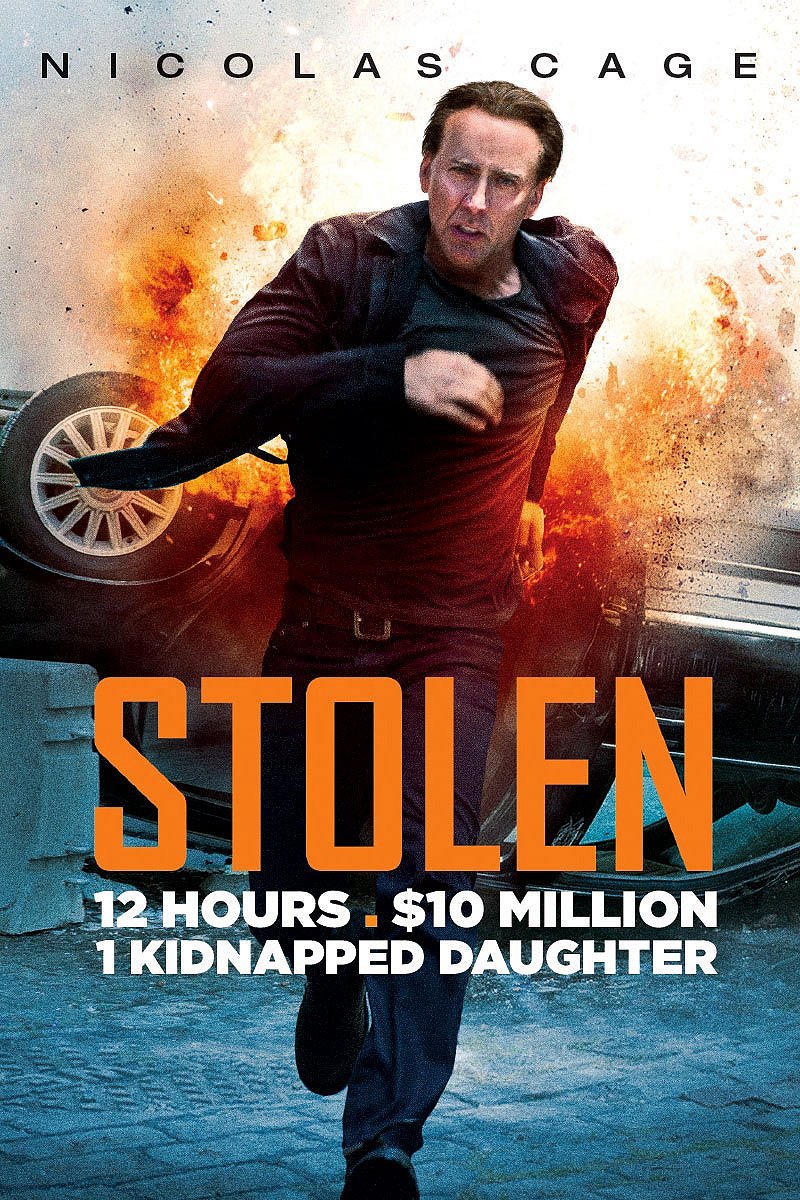
Stolen (2012) - Review

Stolen is a 2012 action/heist movie starring Nicolas Cage, Danny Huston, Josh Lucas, Malin Åkerman, M.C. Gainey, and Sami Gayle. Will Montgomery (Cage) is a bank robber who has just been released from prison after 8 years. He was the only person in his crew (Åkerman, Gainey, Lucas) to have been captured on a heist where the $10 million dollars was burned before Will was captured. The otehr members of his crew were able to make it away from the scene of the crime before Will was nabbed by Agent Harland (Hutson) of the FBI. Upon his release from prison, Will learns that his presumed dead ex-crewmate, Vincent (Lucas) has kidnapped Will's estranged daughter, Alison, (Gayle) and wants his share of the money he presumes is still in circulation. Will must not only try and find Vincent to save Alison, but come up with Vincent's share of the lost money years prior with the help of the remainder of his former crew. 

To call Stolen a heist movie is almost disingenuine. The movie hardly spends time on the act of burgaling into a location and retrieving money. The movie posits Will as the world's best bank robber, and really goes hard to sell it by showing the ease at which he and his crew set up for a score and get accomplish their goals. There isn't any anxiety as to his capability to not only infiltrate a location, but exfiltrate without a hitch - him being captured is only a result of one of his crewmates deviating from the plan and leaving him in a desperate situation. The real meat of the movie deals with Vincent and Will's destruction of NOLA during Mardi Gras and evasion from teh FBI. There is a sort of warmness between Will and Agent Harland that is refreshing - it almost feels as though they are in a brotherly relationship the way they interact, but that does not distract from the fact that Will does violate the terms of his parole in his pursuit to find his daughter. Lucas' Vincent is a shell of his former self, and has spiraled into madness leading to kidnapping a minor to get to Will and the money he suspects is still available. Everything seemed grounded in this movie except for this character. Yes, the motivation is completed in the introduction scene of this movie, but this character seems better in place in the Batman universe as the Joker more than he does a washed out bank robber. 

I remember watching this movie when it was released on DVD, driving to BestBuy to see if they got it in stock the Tuesday night it was supposed to be. I was expecting an unhinged Nic Cage and was disappointed at the time, but my feelings on the movie has changed quite a bit as I watch it again. I do not think that this is a particularly noteworthy movie, but it is enjoyable for Lucas' anachronistic performance alone. Toward the end of the movie, I wanted to measure the distance that Cage travels on foot; most of the movie is Cage running through various neighborhoods in NOLA in a jacket and long pants, only out of breath when he crashes a car and pulls himself from the wreckage.  If you do not come in expecting a zany Cage, you might come out on the other side enjoying this bad movie a little bit.