Tuesday, February 6, 2024

Arsenal (2017) - Review

Arsenal (2017) is an action/thriller movie starring Adrian Grenier, Johnathon Schaech, and Nicolas Cage with John Cusack starring in a supporting role. Michael 'Mikey' Lindel (Schaech) is a source of trouble for the Lindel family, especially his brother JP (Grenier). Most of this trouble comes from Mikey's criminal past and current post-jail exploits which causes a constant stream of chaos for his younger brother. Mikey is eventually kidnapped by a local mobster, Eddie King (Cage), and JP must use all of the tools and resources available to him, the most support he receives is from his friend Sal (Cusack) who is working off duty from his role as a police detective, as a successful businessman and upstanding local citizen to get his brother back safe.

Arsenal feels like a product that was trying to be saved by the studio. Related only by studio acquisitions, Arsenal is tied to another Nicolas Cage vehicle from the early 90s, Deadfall. Eddie King as a character was a secondary antagonist in that movie, an unhinged conman underling whose fate was definitely closed. Eddie has since graduated to taking over a portion of the New Orleans crime scene and wielding influence over the Lindel family since Mikey and JP were children. The role of Eddie in the story could have been achieved by any two-bit gangster character that didn't already have a debut in another middling movie nearly 35 years before. It was a nice touch to include Christopher Coppola, Cage's brother, as Eddie's own brother. Chris not only being Cage's brother but also the co-writer and director of Deadfall is another connection point for the studio to mingle easter eggs that do not contribute to the substance of Arsenal. Speaking of substance, there is hardly any substance to Arsenal. There is a theme of brotherhood and being virtuous running throughout, mostly as a critique of Mikey but as a source of consternation for JP. JP cannot leave his brother alone to his consequences due to the sacrifices Mikey made to ensure that JP could live a normal life. This storyline would be compelling if Mikey wasn't deserving of everything coming to him; even though JP has a normal family, successful career, Mikey still has a need to dabble in criminal activities to a force of habit. There is nothing that draws any compassion to either of the brothers though they are constantly placed in dangerous circumstances to draw sympathy. Cusack is vastly underused in this movie where everyone involved is being propped up by a very flimsy script. As an informal consultant for JP doing whatever he can to resolve the situation without much bloodshed, Cusack's Sal almost blends into the background due to how dull everything else is surrounding him.

Arsenal tries to use familiar tropes present in action movies in this era, namely the value of family and friends looking out for each other, but the use of this mechanic is heavy handed when introduced in the opening scene of the movie. The execution of the movie feels dry despite the injection of family values, trust, and loyalty. Including a character who is supposed to have died years earlier only causes confusion, and the only conclusion from which can be made is that there was some heavy studio involvement with the decision to perhaps salvage a project that already had deep flaws.

Tuesday, January 30, 2024

Deadfall (1993) - Review

Deadfall (1993) is a crime/drama directed by Christopher Coppola starring Michael Biehn, Nicolas Cage, Sarah Trigger, and James Coburn. After a father/son con scheme gone wrong, Joe Donan (Biehn) must face the aftermath of the death of his father (Coburn). Working with his uncle Lou (also Coburn) and his underlings (Trigger, Cage) for various con and gang-related activities, Joe tries to learn more about the complicated history that transpired between his late-father and his father's twin.

The movie is packed with some pretty strong performances, sometimes even in more ways than the usual positive indication. I remember watching Deadfall almost ten years ago and relishing in the pure chaos that Cage brings to the screen as Eddie King, Lou's right hand man. This chaos is an evolution of his exploration of an irrational mind that is also on display in Vampire's Kiss, a review in which I believe his performance in Deadfall is mentioned. There are quotes from Cage that have become iconic within my friend group over the years that have come from this movie specifically, so the influence that this movie has had on my social life is quite great. Nic Cage notwithstanding, Michael Biehn gives a tortured performance out of Joe Donan, not because of any trauma that the character is supposed to have - of which he has plenty - but due to the very thin script he was likely given. Michael Biehn is a great actor, and it shows, Joe Donan is not a very strongly written character. James Coburn, whose face or voice you are likely to come across in a variety of different projects spanning nearly forty years, is always welcome to be on screen, and Deadfall is no exception. Again, the paper-thin characterization of both Lou and Mike Donan, of which he plays both characters, can only be improved so much by the skill Coburn did bring to the performance. The loss of Eddie near the middle of the movie marks a point where the train had already left the station; without the paranoia that Eddie brought out of other characters' perceptions of himself and the lack of trust he has in others, Deadfall meanders to a slow fizzle. The movie itself is a series of short, disconnected confidence jobs leading to an unsatisfying denouement.

Without being reductive of any other aspect of the movie, but Deadfall shines when it has out of this world characters, and the only one who fits the bill is Eddie King. Nicolas Cage, despite his later objections to how his 'freakouts' have been received, breathes life into the otherwise stiff body of this movie. Once his character exits the story, the movie goes back to meandering without a purpose. I enjoy Deadfall to a certain extent, and there is some serious talent that could lift the movie out of its muck and mire, but a bad story can only be helped so much by strong performances.

Tuesday, January 23, 2024

Birdy (1984) - Review

Birdy is a drama film starring Matthew Modine and Nicolas Cage. It centers around the efforts of Sgt. Al Columbato to help rehabilitate his childhood friend whom everyone refers to as "Birdy", for his fixation on birds throughout his adolescence. Sgt. Columbato is fresh from his initial recovery from facial reconstruction surgery caused by mines on the Vietnam battlefield and is desperate to regain a sense of normalcy after he himself starts to struggle with losing grip with reality as he tries to reach his friend.

Where Racing with the Moon took a look at the innocence of men before they go to war, Birdy picks up observing the effects of war on the men coming back. This could not be more true since Columbato is himself being observed for troubling psychological behavior while trying to bring his friend back from an already shattered state. Even without any flashbacks, Cage is able to show that Columbato and Birdy have a deep relationship, bringing out an emotional range that I praise in his later movies in one of his first feature films. Al and Birdy form a deep bond in their high school years after Birdy is confronted by local kids who play pick-up baseball in an adjacent lot. After some initial teasing, Al finally puts an end to the torment as he realizes that there is no reason for Birdy to be subjected to it; even though he initially strikes up a friendship to gain a profit by training carrier pigeons, Al sticks with Birdy as Birdy's fascination turns into an eventual hyper-fixation with avian life. I was deeply saddened by Birdy's development in the film, but not because he does anything negative - his fixations are constantly combated by his mother and other children, while there are few people in his life that offer him unconditional love and support (his father and Al). Because the flashbacks take place in what I could assume would be the 50s or 60s, due to the immediate Vietnam connection, mental health care was most likely stigmatized and not very accessible or welcoming for Birdy to achieve any diagnosis that would help him cope with society. The tragedy of Birdy, the character, is that at the start of the movie it is established that he may be too far gone already. Learning more about his fixation with birds cements this already revealed tragedy as Birdy's mind is too fractured and he has finally gotten his wish, which he has had since a teenager, to become a bird.

I was enthralled by Birdy. I didn't know what I was getting into by looking just at the poster for years, but I wasn't expecting a psychological drama. Modine's portrayal of Birdy throughout the film is captivating, especially when his portrayal of the nonresponsive Birdy is a vehicle of progression of character for Cage's Sgt. Columbato. Modine having to handicap himself, to force himself to strip away all emotion during the main plot is a testament to his strengths as an actor. The strength of Birdy is cemented in its abrupt ending, where the audience is left unsettled by the ambiguity. Has the psychosis ended or has Al succumbed to his own? The credits rolling immediately forces the audience struggle with this question, and has forced me to consider it as well for almost a week before sitting down to write this review. I wanted to have an answer as to what I believe the ending of the movie meant to generate a discussion, but nothing I could reason out was satisfying as a conclusion as the filmmakers intended. I will recommend this movie because of the tension that it is still able to generate in audiences nearly forty years after its release. Despite being one of Cage's earliest of movies, Birdy continues to showcase his potential as a leading man even as Cage featured in another pre-war drama (Racing with the Moon) in the same year.

Tuesday, January 16, 2024

Racing with the Moon (1984) - Review

Racing with the Moon is a drama film - directed by Richard Benjamin - set in a small California coastal town. Sean Penn plays Henry "Hopper" Nash, alongside Nic Cage's Nicky, who both have signed up for the United States draft during World War II. In this liminal time, Hopper and Nicky still have their remaining time to explore whatever youth they still have. During this final exploration, Hopper falls in love and develops a relationship with Caddie Winger, portrayed by Elizabeth McGovern, despite his and Nicky's unfounded assumptions that she is of a higher social status than them. 

Racing with the Moon feels as though it was tailor made for me: it is a slice of life film of a forgotten time, and a forgotten place, that plays out low and slow. I have waxed on about the importance of expressing real human stories in previous reviews, but Racing with the Moon particularly shines in its authenticity of expressing some taboo subjects on screen. Sure, there are clumsy attempts at romance by Cage's Nicky, but these attempts are to flesh out his already established explosive nature - where he nearly lays out Crispin Glover in the beginning of the movie in the bowling alley which Nicky and Hopper work. But clumsy romance is what you might expect of someone who is already known to be hot-headed, let alone a teenage boy on the edge of becoming a man forged by war. The relationship between Hopper and Caddie is pure joy to experience despite the eventual reveal that Caddie doesn't belong to a rich family, but her mother works as a housemaid for the rich family whose house they live in. For almost the entire movie, their relationship is forged and continues despite their individual insecurities about the information they both possess about themselves and each other. Hopper's relationship is the mature counterpart to to Nicky's brash and immature nature. Even moments where Nicky could and should be shamed for callously breaking cultural taboos, he is only shamed by his own immaturity, which adds more weight and evidence to the maturity of other characters.

As stated above, I love a good slice of life movie, and Racing with the Moon captures the spirit of the pending loss of innocence of the two male leads and the struggles that they faced before truly letting the innocence slip away. Nothing that occured in the movie felt inauthentic. In fact, the suspension of disbelief that I usually try to have with film solidified into something more; I was truly lost and captivated in the narrative captured by the filmmakers. I wasn't looking at a fresh Nic Cage, I was looking at Nicky. I didn't see Sean Penn, I saw Hopper. I didn't see any incongruities in the performances displayed and was allowed to be enchanted by the pure art before me. Racing with the Moon stands as an example of what many films aspire to do to its viewers, and what very few achieve, even today. You would do well, regardless of any affinity to Nic Cage, to watch Racing with the Moon and get lost in its exploration of youthful joy, even in the face of certain danger.

Tuesday, January 9, 2024

Honeymoon in Vegas (1992) - Review

The movie commands great star
power, but fails to capitalize with a
lackluster execution.
Honeymoon in Vegas is a romantic comedy movie starring Nic Cage, Sarah Jessica Parker, and James Caan. Nic Cage plays an everyman private detective, Jack Singer, who is deeply afraid of marriage due to his mother's insistence at her deathbed that he remain unmarried. This upsets his longtime girlfriend, Betsy (Parker), who has waited a significant amount of time for Jack to come around. Under threat of Betsy leaving him, Jack suggests they go to Las Vegas that weekend and get married. Jack's anxiety continues to push the marriage further in the day, only for him and Betsy to be trapped in the plans of a seasoned gambler, Tommy Korman (Caan),  who is determined to take Betsy as his own wife through an underhanded poker scheme.

Honeymoon in Vegas is a fun and snappy movie, but it is a movie that shows its 31 years of age in every sense. Being born a couple years after this movie was made, I am really only aware of how the culture boomed technologically towards the year 2000. I bring this up in order to highlight the reasons why the movie ultimately falls short for me; save for the last maybe 20 years, humanity has never been so connected with each other than they are now. The movie does attempt to address the fact that Jack does have limited ways of tracking Betsy and Tommy across the country as Jack and Betsy's relationship falls apart, especially since Jack is an established and mildly successful private detective, but I ended up having to throw my hands up as he always is one step behind finding the new pair through pure serendipity. At the end of the day, I have to admit that Honeymoon in Vegas is supposed to be viewed with whimsy and aloofness, otherwise I may find myself to be more judgemental than I should. I did find joy looking back at Cage's involvement in this movie with a Vegas setting, most particularly with the international Elvis convention subplot subtly poking its head in at every turn. I say I find this vicarious joy because I know of Cage's long obsession with the King of Rock and Roll, ELvis Presley. This is especially true of when the subplot comes to the fore at the end of the movie as Jack has to join a plane full of Flying Elvises in order to get back to Vegas in time for thwarting Tommy's plan to marry Betsy. Having to don the light-up flight suit seems like a culmination of everything outside of Jack to gain the confidence he needs to show Betsy just how much he does care for her. 

I have to mention the performances in the movie briefly. There is not much for me to say about the performances in the movie, as the characters all seem average to me; even the ever-so-successful professional gambler, Tommy Korman, seems like an average guy toward the end of the movie. Beside the many Elvises sprinkled throughout the movie, the only character actor present is Ben Stein, who portrays a nameless older man whom Jack berates for spending ages to purchase an airline ticket weeks in advance, an older man who is an obstacle for Jack as he tries to pursue Betsy from town to town. 

I remember enjoying this movie when I watched it years ago, as I added it to my collection, and I still do enjoy it. It is a fun romp, but trying to think about the movie critically brings my excitement to recommend this to anyone else down to almost nil. It is a weird point in Cage's filmography, as he is transitioning to more mature roles - as opposed to his many coming-of-age roles of the 1980s. I feel as though he is trying to find the roles that he best inhabits and can bring to life on the big screen, but Honeymoon in Vegas is not something I can recommend to anyone today, 31 years later. It is a product of its time in the most negative sense, and is not a diamond in this rough patch of filmography.

Tuesday, January 2, 2024

Raising Arizona (1987) - Review

Raising Arizona is a crime/comedy film directed by Joel Coen starring Nicolas Cage, Holly Hunter, John Goodman, William Forsythe, and Frances McDormand. Nicolas Cage stars as H.I. McDunnough, a repeat convenience store robber, who falls in love with a police officer named Ed (Hunter) and attempts to live an honest life and start a family. The two are told that they are unable to have children and set out to kidnap one of a set of quintets that are made famous because of their association with a local businessman, Nathan Arizona (Trey Wilson) and his wife (McDormand). The couple encounter setback after setback as reality crashes in around them as authorities seek the safe return of the lost Arizona baby.

Films from the same era usually fall victim to feeling dated because of the prominent use of current media and technology to appeal to the audience of that time. The focus of Raising Arizona is reliant on the situational comedy that H.I. and Ed find themselves in. The opening monologue establishes the unlikely couple, felon and police, and establishes that what you are going to see is due to the complexities of their different backgrounds. Despite their differences, the two characters work so well together as they try to navigate the consequences from illegally obtaining their new baby boy. Cage shines as he can be as zany as he can be while inhabiting this role, as being an oddball is a requirement to be a character in this movie; his command over the range of the extremes of the broad spectrum of emotions is a positive in Raising Arizona. John Goodman and William Forsythe as escaped convicts also have great chemistry with Cage and Hunter and, until later on in the movie, they seem to be neutral observers that do not threaten the constitution of the new family. The humor sprinkled throughout keeps the action moving at a great pace and obfuscates the timers running in the background of when the next thing is supposed to go wrong. The story the movie tells is incredibly tight; there is no superfluous action, and everything has a purpose. Even when there are quiet moments in the movie, the audience knows that there is something lurking around the corner due to the precarious situation H.I. and Ed find themselves in. Raising Arizona is a master class in storytelling and remains a classic piece of film history nearly 35 years later. This is a piece of Cage history that should not be missed by anyone, whether they are engaging in a similar project or not. 

It killed me to not write so much about the ins and outs of this movie - I just imagined someone clicking on this review hoping to get something more than what this review actually turned out to be. For someone who has not seen the movie, it is worth seeing even without knowing every little nuance of film-making and discovering the magic of the story for yourselves. I wanted this to be a record of the high praises that I have for this movie as I move through the project.

Tuesday, December 26, 2023

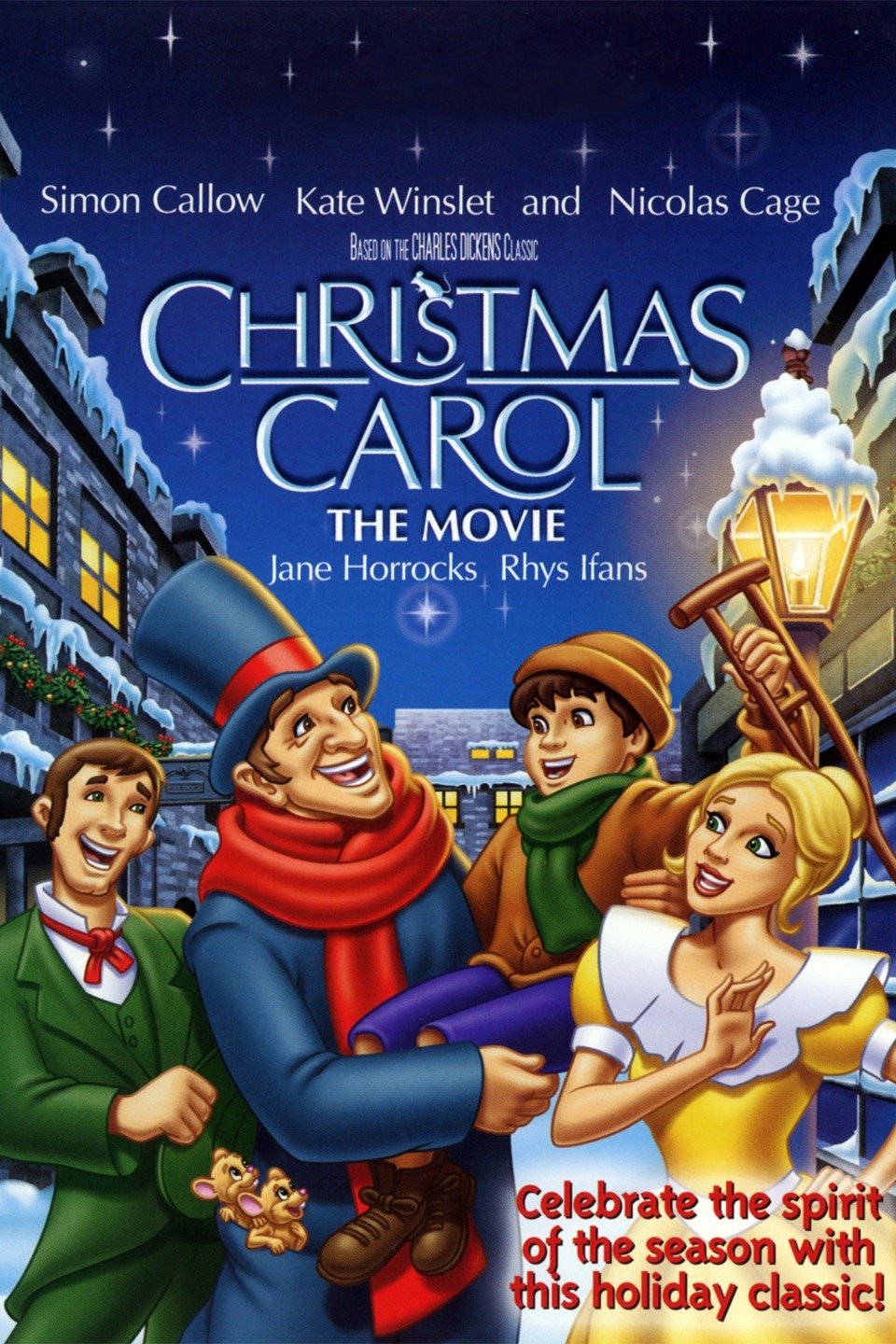
Christmas Carol: The Movie (2001) - Review

Christmas Carol: The Movie is an animated adaptation of the Charles Dickens short novel of the same name. It is the classic story of an individual, Ebenezer Scrooge, who has no regard for his fellow man, especially during the Christmas season, and is confronted by spirits who show him the effects of his life in the past, present, and potential future. The cast of this movie is star-studded, comprising of  Simon Callow (Scrooge), Kate Winslet - playing a nurse (Belle) previously romantically affiliated with Scrooge, Nicolas Cage - portraying the spirit of Jacob Marley, Scrooge's previous business partner, along with roles filled with Michael Gambon, Robert Llewellyn, and Rhys Ifans.

The movie is technically sound. The movie sits at 77 minutes, so not as long as what would be considered full-feature length, but that is not something to hold against the movie. The story that is told is fairly familiar, as it has been adapted in popular media countless times in the past century, but the non-familiar bits of the story were also interesting without wearing too thin. The performances given for this movie were great, however, they are overshadowed by a less than par animation quality. I hate to speculate as to if elements of an average movie were different if that would make it better, but I can only imagine if the animation for this adaptation were of better quality than it would be a product that cable channels would air during the Christmas season. Speaking about Nic Cage's performance in particular, I believe it is a waste of the range of emotion that he is known to be able to show on screen or by voice in other projects. His role in this movie is incredibly brief, and is only on screen to be wispy and supernatural. It was a shame to see such small roles for some big names, but I think that the movie struck a good balance between the portions that it did add to the story, especially the live action segments at the beginning and end of the movie. 

I would not really recommend this movie to watch during the holiday season, and not particularly valuable for those who are embarking on a similar project as me. As I have stated above, this movie is technically sound. It is fairly average, and really not worth many peoples' time. It is a good adaptation of a classic story, but even with the benefits of modern actors and storytelling media, Christmas Carol: The Movie is destined to remain such a niche product when there are countless other adaptations that have better viewing value.

Tuesday, December 19, 2023

Trapped in Paradise (1994) - Review

Trapped in Paradise is a 1994 comedy film starring Nicolas Cage, Jon Lovitz, and Dana Carvey. The three play brothers Bill, Dave, and Alvin Firpo. Dave (Lovitz), a con man, and Alvin (Carvey), a kleptomaniac, are recently released convicts remanded into the custody of their brother Bill (Cage), a restaurant manager who struggles to keep his own nose clean. After hearing about a bank with lax security in a rural Pennsylvania town, the three rob the bank only to start encountering trouble from trying to escape the town, aptly named Paradise, from state police, FBI, and a pair of locals. Over the course of Christmas Eve, the three each find themselves charmed by the small town and attempt to change their natures.


Trapped in Paradise is a finished product that is just a shame in its released state. How can a movie starring Jon Lovitz and Dana Carvey be anything but funny? In fact, the movie tries at every point to be a comedy, but only elicited a couple small chuckles toward the end of the movie - with a runtime of nearly two hours, this made for a pretty bland experience. The interplay between the three protagonists was quite humorous, even if it didn't elicit any laughs, while capturing the brotherly spirit any dysfunctional family. What tanked my enjoyment of the movie ultimately was reducing Carvey down to a caricature of his comedic self. Lovitz playing the same comedic straight man that he always seems to play was not detrimental to my experience, but his character, much like Carvey's Alvin, stayed flat the entire time. Cage's Bill Firpo continues his streak in this time in his filmography as trying to establish himself as an everyman. In fact, Cage stands out in this movie for being as normal of a person as possible, even though Bill is still a more subdued version of his brothers. Sean McCann as the police chief of the idyllic town and Richard Jenkins as FBI agent Peyser were welcome faces to see throughout the movie, which the movie could have used more of, even if they were featured fairly prominently in the ending scenes of the movie. While Trapped in Paradise is full of raw acting talent, it really failed to come together. Trapped in Paradise is too focused on reducing the output of Lovitz and Carvey for both to shine as comedic roles, and while the performance by Cage was appropriately grounded, it does not save this movie from being in the pile of forgotten Christmas tales.

Tuesday, December 12, 2023

The Family Man (2000) - Review

The Family Man is a 2000 holiday-drama film starring Nicolas Cage and Téa Leoni, also starring Don Cheadle and Jeremy Piven in supporting roles. Nicolas Cage plays Jack Campbell, a Wall Street executive, whose relationship with his girlfriend Kate (Leoni) 13 years earlier ended with the extended time apart due to Jack's post-college internship in London. After encountering a man (Cheadle) trying to rob a convenience store, who sends Jack to an alternate timeline where he and Kate never ended their relationship. Navigating his new life with Kate, Jack must figure out what he really wants in life - a life filled with meaningful relationship, or his lifestyle of decadence.

The Family Man is a great modern remix of classic holiday stories, namely A Christmas Carol and It's a Wonderful Life. Jack Campbell is the Ebenezer Scrooge of this story, a man who is consumed by greed and sees the Christmas holiday as an impediment to the function of his business, and also a man who sees all of his personal relationships as transactional. Jack must be shown what his alternate self found of value in order to reevaluate his life decisions once he comes back to his point of origin. I make a comparison to It's a Wonderful Life in the opposite sense: Jack's glimpse into the other reality is not a glimpse of the lives of others around him ever without his presence, but it is a reflection of what his life is if he chased what he should value in life more so than his current shallow life. Usually when Nic Cage plays an "every man" type of character, he is wildly out of place. His predicament in this movie is what subverts that for Cage; he is still an every man, but he is so wildly out of his environment, literally and figuratively, that it plays to his advantage. The shock to Jack's system makes him the oddball in a situation where this is the normal. I thought that the daughter of Jack and Kate figuring out that he is not the Jack that everyone else knows was a great touch as children are incredibly perceptive to changes in their environment. Her helping Jack reorient his life so that he can be a functioning adult was not only charming, but funny. The infrequent visits by what is seemingly a supernatural being portrayed by Cheadle are always filled with humor, which plays on Jack's initial anger about his relocation, but later is still angry to see Cheadle, this time not wanting to go back to his empty life. Jeremy Piven is a good every man and confidant to the alternate Jack, and is someone who always tries to keep his best friend on the right track. Last, but not least, we have Téa Leoni's performance as Kate. Whatever relationship that Jack and Kate had in this reality was the best relationship that anyone could ask for, and it really shows in her performance once Jack is planted in the middle of her life. In my eyes, Leoni steals the show as she makes the audience able to forget that we are viewing a movie and lets us get lost in the story. 

I have seen The Family Man years ago when I picked up the BluRay and quite enjoyed it. I knew that the movie dealt with finding the joy and meaning in the relationships that you have, but I didn't imagine that it was going to give me such a reaction as it did. I think the older that I get, the closer I get to the ages and life circumstances of Jack and Kate in the glimpse of reality, the more I relate to the message of the movie. Even though this movie spans more than just the Christmas holiday - the movie actually spends as little time possible on the actual holiday - the film now hold a place on my shelf for a Christmas movie. It's not the best choice for a Christmas movie, but it is another choice in the sea of tried and tested, and frankly overplayed staples. It also sits at the height of Cage's ascent to stardom and is a nice gem out of the rough that is to follow in later years. I would definitely recommend cozying up on the couch with a blanket and spending some time getting lost in this fantasy story, a story that takes what works with older stories and making a charming modern twist on those revered and dominant holiday stories.

Tuesday, December 5, 2023

Bringing Out the Dead (1999) - Review


Bringing Out the Dead is a 1999 psychological drama directed by Martin Scorsese starring Nicolas Cage as Frank Pierce, a burnt-out paramedic in New York City, Patricia Arquette as Mary Burke, the daughter of a man who Frank and his ambulance partner saved from death, and John Goodman, Ving Rhames, and Tom Sizemore as his successive partners as the story unfolds. Frank is haunted by the frequent hallucination of a teen who he failed to save some months prior, while trying day by day to hold onto his sanity. 

I didn't think that watching this movie would constitute as studying going into my viewing, but it activated all of my attention. I was utterly captivated by this movie the entire runtime due to its relevance to my current studies. I frequently read about the secondary trauma response that builds up in medical professionals that leads to occupational burnout, and this film does an expert job at portraying the response through Nic Cage. It truly hit me hard when early on in the movie, his boss receives news from higher up in the chain that he needs to be fired because of his being late, not showing up for a shift, among other deserved reasons, however it does not reach that point of termination due to the lack of paramedics this person has to work NYC on a daily basis. Even when Frank is begging to be fired, he isn't because of the shortage of paramedics; Frank can't even quit because of the guilt that he has of not being able to save people for months on end. Another sad depiction of the healthcare industry, especially in a high-crime density area such as New York City, is the apathy that the staff in this small critical access community hospital have toward the patients that come in due to drugs and alcohol. The portrayal is a deep exaggeration of this apathy, but the attitudes shown in these small vignettes throughout the film are still present in healthcare, even decades later. There has been a push toward "compassionate care", or trying to remove the stigma of drug and alcohol use (illicit or otherwise) to give patients the dignity that they deserve in improving the patient's health. Not ever being present in the clinical hospital environment, but present in other healthcare environments, the dialogue throughout the was corny and over the top, but it spoke to the real life situations that healthcare workers of all kinds are faced with 24/7 and interested my academic side as the working conditions that we in my field and as society are trying to fix have always been present. 

I would expect nothing less of a great movie by a director with such a pedigree as Scorsese, but Bringing Out the Dead falls into Cage's filmography in a time where he has experienced a meteoric rise in success. Being familiar with Nic Cage's filmography for almost 12 years now, I never investigated this movie; I didn't even have an idea what this movie was about until I pulled it up on the streaming service. Nic Cage is not alien to portraying characters that suffer real life syndromes, and at the height of his action star popularity, he continued to involve himself in projects that show extremes of human emotions and experiences. He shows in Bringing Out the Dead that humanity is present in someone, even in the most broken of people. It is an important movie to watch if one wants to get a wide view of the human condition in film, and is a performance that those interested in Nicolas Cage as an actor would be remiss to leave out of their viewing.